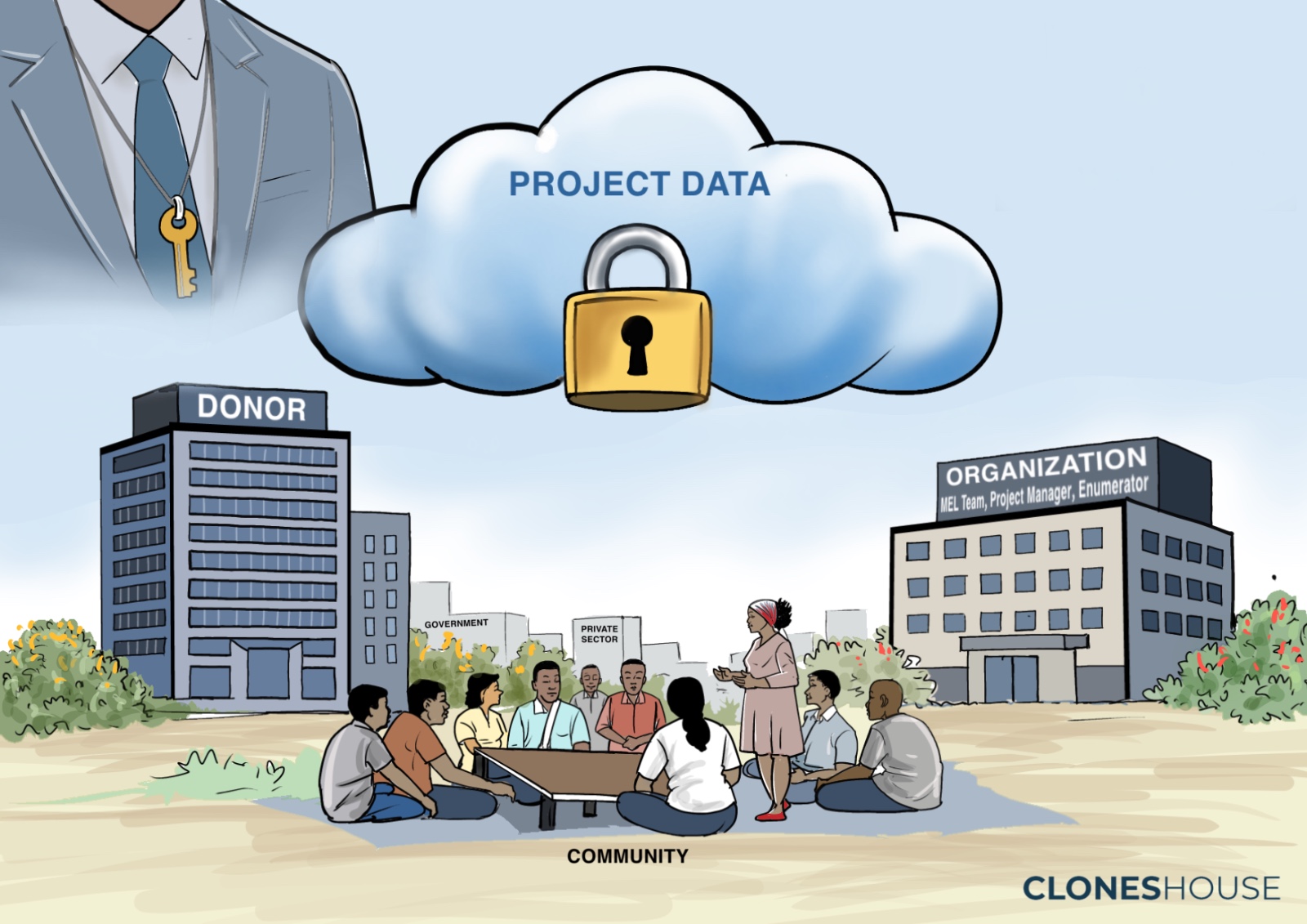
Every year, enumerators across Africa’s towns and villages, from farmers in Nigeria’s Nasarawa State to nurses in Uganda’s Kasese district and fisherfolk in Kenya’s Homa Bay, gather stories, surveys, and biometric data. These rich insights quickly travel upwards: into dashboards, PowerPoints, and donor reports in Geneva or DC. But for the people behind the numbers, feedback is slow or never arrives.
The result? A broken learning loop. A World Bank review of over 500 development operations found a consistent problem: data collected from citizens is seldom returned to them in ways that foster ownership or change.
This imbalance undermines both ethics and effectiveness. When community health workers never see the findings they helped generate, local innovation stalls. When citizens tire of extractive surveys, data quality collapses. And when partners are denied raw datasets, they’re forced to repeat mistakes that others have already paid to discover.
Recent work by OECD-DAC, UNDP, and Eval4Action echoes the same truth: data should not just flow upward, it must flow outward and back.
Here are five concrete, evidence-based ways MEL actors, governments, civil society, and funders can start sharing power over data today.
- Co-create learning questions
Before drafting your survey, ask a basic question: “What do you want to learn?” not just to donors, but to programme staff, field officers, local chiefs, and youth groups.
When evaluation questions reflect shared curiosity, learning becomes mutual.
In Kenya, UNDP-supported community stewards helped revise questionnaires to include access to disability-friendly WASH facilities, an insight that was missing from the original logframe.
Quick win: Add a 2-hour question-framing session during the inception phase. Budget modestly to include local stakeholders who are often excluded.
- Build automatic feedback loops
If evidence never returns to its source, it’s not learning it’s extraction. Plan from the outset how topline findings will go back to communities in formats they actually use: WhatsApp voice notes, short animations, village posters, or local radio updates.
In Uganda, a community-led health programme cut under-five mortality by over 25%, partly due to rapid, locally tailored feedback meetings held just weeks after each data collection round.
Quick win: Within two weeks of fieldwork, send a 90-second voice note (in the local language) to the community’s data contact, summarising key takeaways.
- Draft data-sharing MOUs
Most evaluations in Africa are funded with foreign aid, yet too often, the datasets disappear into private clouds. Use simple data-sharing agreements to spell out who owns the data, who can access it, and how privacy is protected.
In Nigeria, Cloneshouse has piloted community-level MOUs that clarify access terms for both implementers and community representatives, referencing the 2023 Nigeria Data Protection Act. Find a template for use here.
In Kenya, counties like Tana River require tripartite MOUs (community–CSO–government) before any digital survey tool is deployed.
Quick win: Adapt a standard one-pager MOU for your next MEL plan. Include it as an annex in your proposal or inception report.
- Invest in community data champions
Data illiteracy disempowers. By training one “data champion” per ward or district, projects create local bridges between numbers and action. These champions don’t need PhDs; they need simple tools, mentorship, and visibility.
In Kenya, trained volunteer stewards now lead data reflection sessions in over 30 wards, using dashboards to hold county officials accountable.
Quick win: Allocate $20–30 per champion per quarter for transport and airtime. Add a data literacy module to your next field team training.
- Blend stories with statistics
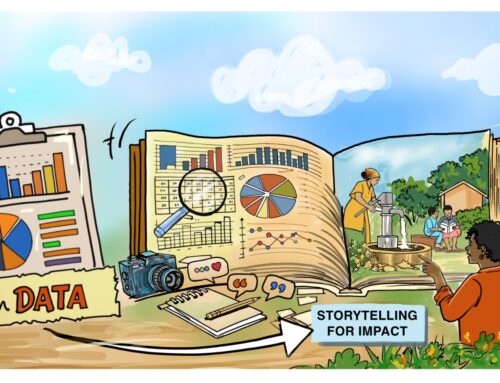
Averages don’t move hearts; stories do. For every chart or scorecard, pair it with a short quote or anonymised image that adds human meaning. This helps both community members and policymakers see the people behind the numbers.
In Nigeria, youth evaluators paired each survey chart with a 50-word quote from a community member, producing one-page “data portraits” that are now printed in offices across three ministries.
Quick win: For every major finding, write a captioned photo or one-paragraph story. Share it via email, SMS, or WhatsApp with both funders and frontline workers.
Conclusion & Call to Action
Power-sensitive MEL is not a luxury; it is the foundation of ethical, inclusive development.
Whether you work in Kampala, Kano, or Copenhagen, you have levers to pull:
- Government agencies: Make open data and feedback a standard part of all MEL Terms of Reference.
- CSOs: Push back against extractive survey models. Prioritise joint sense-making and inclusive learning.
- Funders: Score proposals based on their downstream data-sharing practices, not just their dashboards.
Ask yourself today: Who else needs to see the data on my laptop—and how can I get it to them in a form they can use?
Let’s hear from you. Share your wins or your roadblocks in the comments section of the Cloneshouse Blog. Together, we can turn data into shared power and evidence into lasting equity.
ABOUT THE AUTHOR
Ronald Kakeeto is a Cloneshouse Internship Programme Alumni, and a Monitoring & Evaluation Specialist with a strong background in strategy execution, performance measurement, and resource mobilization. With extensive experience in developing and implementing M&E Frameworks, Balanced Scorecards (BSC), and Wildly Important Goals (WIGs).